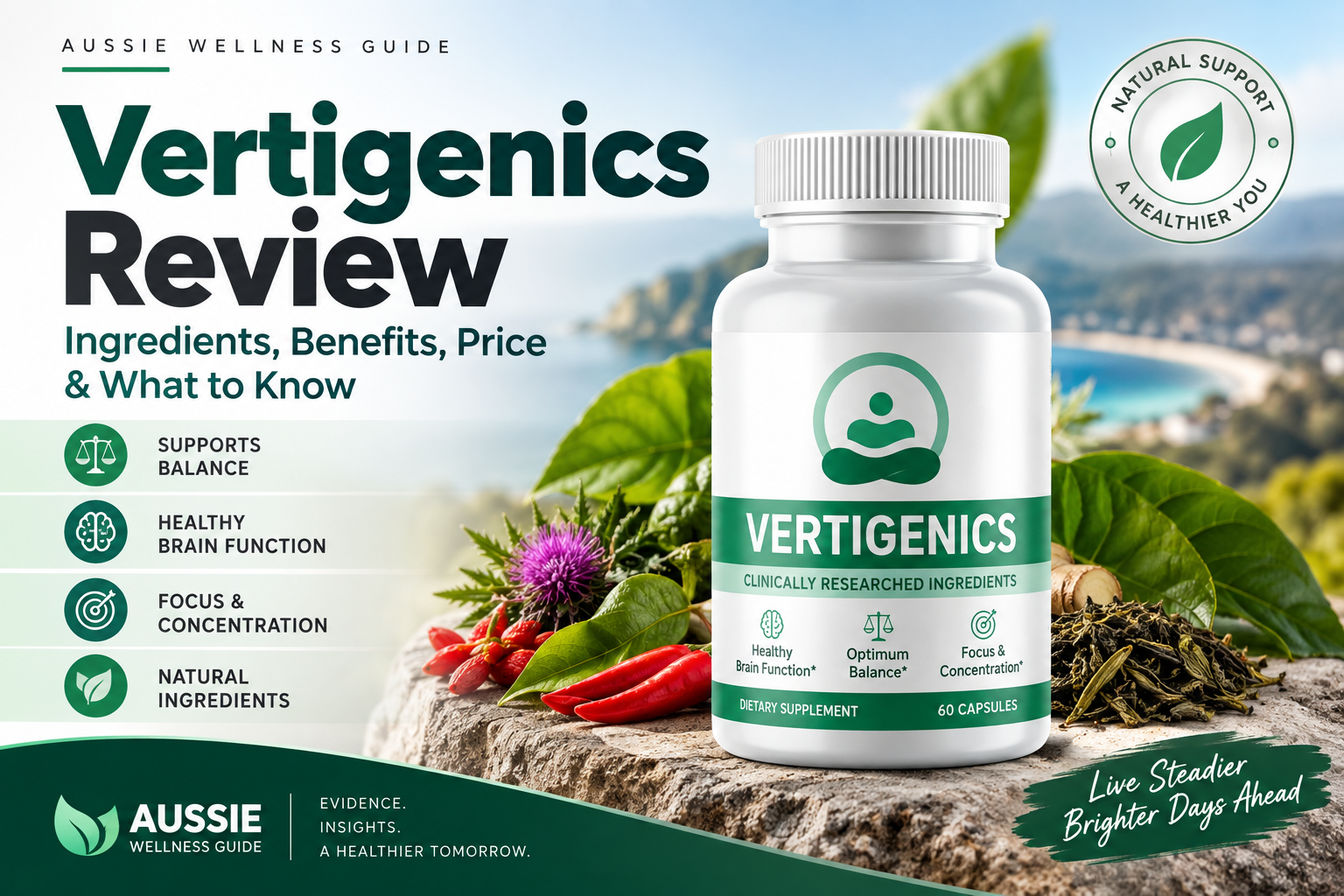
Vertigenics Review: Vertigenics is a dietary supplement marketed for balance, brain function, focus, and concentration. In this review, we look at the formula, ingredients, pricing, suggested use, available research, safety considerations, and what the manufacturer says about the product.
Affiliate Disclosure: This article contains affiliate links. If you purchase Vertigenics through a link on this page, we may receive a commission at no additional cost to you.
What Is Vertigenics?
Vertigenics is a dietary supplement presented as a formula designed to support the body’s balance system, along with brain function, focus, and concentration. The manufacturer describes it as a natural formula containing a combination of minerals, plant ingredients, and antioxidant compounds. The official sales page lists 10 ingredients: zinc, chromium, alpha lipoic acid, green tea leaf, berberine HCL, resveratrol, milk thistle, cayenne fruit, Korean ginseng, and banana leaf.
The product is supplied in capsules, with the manufacturer stating that the suggested use is two capsules per day with a glass of water. Based on the product information, a bottle containing 60 capsules represents approximately a 30-day supply when used at that amount. Vertigenics is presented as a dietary supplement rather than a medication, and the manufacturer states that its product claims have not been evaluated by the U.S. Food and Drug Administration.
What Does Vertigenics Claim to Do?
The marketing for Vertigenics focuses primarily on support for the balance system, brain function, focus, and concentration. The sales page describes the formula as being designed to support balance and help people carry out everyday activities with confidence. These are manufacturer claims, however, and they should not be interpreted as evidence that the finished Vertigenics formula can diagnose, treat, cure, or prevent vertigo or another medical condition.
This distinction is important when evaluating any supplement. Research on an individual ingredient does not automatically demonstrate that a finished product produces the same result. The dose, extract, formulation, combination of ingredients, duration of use, and characteristics of the people studied can all affect the outcome. The available scientific information therefore needs to be considered ingredient by ingredient rather than assuming that every claim made about the finished formula has been clinically established.
Vertigenics Review: Ingredients
If you are researching other dietary supplements, you can also read our [Mitolyn Review] for a detailed look at its ingredients, pricing, and product information.
The Vertigenics formula contains 10 ingredients according to the manufacturer’s product page: Zinc, Chromium, Alpha Lipoic Acid, Green Tea Leaf, Berberine HCL, Resveratrol, Milk Thistle, Cayenne Fruit, Korean Ginseng, and Banana Leaf. The sales page describes these ingredients as part of a proprietary formula intended to support brain and balance-related functions.
One limitation is that the sales page itself does not provide a complete dose breakdown for every ingredient. That makes it difficult to compare every component directly with amounts used in human clinical research. This is particularly relevant because an ingredient can have research at one dose while a commercial supplement may contain a different amount. For that reason, the presence of an ingredient should not by itself be treated as proof that the product will reproduce results seen in a clinical study.
Zinc
Zinc is an essential mineral involved in numerous biological processes, including immune function, protein synthesis, DNA synthesis, and cell signaling. The National Institutes of Health notes that zinc is necessary for normal physiological functions, while excessive supplemental intake can cause problems, including interference with copper status at sufficiently high levels.
Vertigenics includes zinc as one of its listed ingredients, but the presence of zinc does not establish that the supplement can improve vertigo or balance problems. Zinc is a nutrient with established physiological roles, but the evidence for a particular health outcome depends on the person’s nutritional status, the dose, and the specific condition being studied.
Chromium
Chromium is a trace mineral that may play a role in carbohydrate, fat, and protein metabolism. NIH sources explain that chromium may enhance insulin action, although its exact biological role remains incompletely understood. Chromium supplements are available in several forms, including chromium picolinate.
Chromium is therefore more directly associated with metabolic processes than with a specific treatment for vertigo. Research on chromium supplementation has produced mixed findings for several health outcomes, and the evidence should not be interpreted as demonstrating that chromium in Vertigenics treats dizziness or vestibular disorders.
Alpha Lipoic Acid
Alpha lipoic acid is an antioxidant compound that has been studied for several health applications. Research has particularly examined its potential role in diabetic neuropathy and metabolic conditions. According to NCCIH, studies have produced inconsistent results for diabetic neuropathy, although some reviews have reported possible reductions in neuropathic pain.
This evidence is useful for understanding the ingredient but does not establish an effect of Vertigenics on balance or vertigo. NCCIH also notes that common side effects associated with alpha lipoic acid supplementation can include headache, heartburn, nausea, and vomiting. The amount contained in Vertigenics should therefore be considered alongside other supplements or medications a person may already be using.
Green Tea Leaf
Green tea comes from Camellia sinensis and contains compounds including catechins and caffeine, depending on the preparation and extract. NCCIH reports that research has investigated green tea and green tea extracts for numerous purposes, but definite conclusions cannot yet be reached for many of the health claims associated with them.
Green tea extract also deserves attention from a safety perspective. NCCIH reports that some people using concentrated green tea extracts have experienced liver injury, although such events are uncommon. Green tea products can also interact with certain medications. Anyone taking medication should therefore discuss concentrated green tea supplements with a healthcare professional before use.
Berberine HCL
Berberine is a compound found in several plants and has been studied particularly in relation to glucose metabolism, cholesterol, and other metabolic outcomes. NCCIH notes that some research suggests berberine may have beneficial effects on blood glucose and insulin resistance, but the quality and consistency of the evidence vary.
Berberine can also interact with medications and may cause gastrointestinal effects such as nausea, abdominal discomfort, constipation, bloating, or diarrhea. NCCIH specifically advises caution for people taking medicines and states that berberine should not be used during pregnancy or breastfeeding or given to infants.
Resveratrol
Resveratrol is a naturally occurring compound found in certain plants and foods and is frequently studied because of its antioxidant properties. Research has investigated resveratrol in areas including metabolic health and blood glucose control. NCCIH describes the available evidence as low certainty for some metabolic outcomes and notes that additional research is needed before firm conclusions can be made.
Resveratrol appears to be generally well tolerated when taken orally, but it may interact with certain medications, particularly anticoagulant or antiplatelet drugs. This is another reason that the complete ingredient list should be considered before adding a supplement to an existing health routine.
Milk Thistle
Milk thistle, also known as Silybum marianum, contains compounds collectively referred to as silymarin. It has traditionally been used in connection with liver health and has been investigated for several conditions. However, NCCIH states that there is not enough high-quality evidence to reach definite conclusions about its effectiveness for many health conditions.
From a safety perspective, milk thistle is generally well tolerated when taken orally, although digestive symptoms such as bloating, nausea, and gas can occur. Allergic reactions are also possible, particularly in people sensitive to related plants. It may interact with medications, so professional advice is appropriate when medicines are involved.
Cayenne Fruit
Cayenne contains capsaicin, the compound responsible for the characteristic heat of chili peppers. Research has examined cayenne preparations in several contexts, including pain, but evidence for one application does not automatically translate to balance or vertigo. NCCIH notes that some evidence exists for topical cayenne preparations and certain pain conditions, rather than establishing a role for oral cayenne in treating vertigo.
Cayenne may also affect blood glucose, which is relevant for people taking diabetes medications. Because Vertigenics contains several ingredients that have been investigated in metabolic contexts, people taking medication for blood sugar should discuss the complete formula with their healthcare professional before using it.
Korean Ginseng
Korean ginseng, also called Asian ginseng or Panax ginseng, contains compounds known as ginsenosides. It has been studied for several potential applications, including cognitive function, fatigue, metabolic health, and other conditions. NCCIH reports that some small studies have suggested possible cognitive effects in certain groups, but much of the research consists of relatively small or short-term trials.
Asian ginseng also has potential safety considerations. Insomnia is one of its most commonly reported side effects, and it may affect blood sugar or interact with certain medications. NCCIH advises people taking medications to consult a healthcare professional before using herbal products such as Asian ginseng.
Banana Leaf
The manufacturer lists Banana Leaf as the tenth ingredient in the formula. Because the sales page does not provide a detailed standardized extract description or individual dosage for this ingredient, it is difficult to compare the amount used in Vertigenics with specific human clinical research.
This is an important limitation to mention in a transparent review. An ingredient being present in a formula does not mean that the exact formulation or dosage has been clinically evaluated. Consumers who want to assess a supplement scientifically should look not only at the ingredient names but also at the standardized extract, dose, and quality of the evidence supporting the intended use.
What Does the Research Say About Vertigenics?
The strongest way to interpret Vertigenics is to distinguish research on individual ingredients from clinical research on the finished product. The sources reviewed for this article provide research on several individual ingredients, including chromium, alpha lipoic acid, berberine, green tea, milk thistle, resveratrol, and Asian ginseng. However, evidence involving one ingredient cannot establish that the complete Vertigenics formula produces the same effects.
This distinction is especially relevant because the manufacturer’s own description focuses on balance, brain function, focus, and concentration, while several of the ingredients have been studied more extensively in areas such as metabolism, antioxidant activity, or general cognitive function. The product page itself does not present a clinical trial demonstrating that the finished Vertigenics formula treats vertigo. Therefore, readers should view the supplement as a dietary product marketed for nutritional support rather than as a clinically established treatment for a vestibular disorder.
This Vertigenics Review also highlights an important distinction between ingredient research and evidence on the finished formula. While several individual ingredients have been studied for different health-related purposes, those findings should not automatically be interpreted as proof that Vertigenics produces the same effects.
Vertigenics Benefits
According to the manufacturer, Vertigenics is designed to support healthy brain function, optimum balance, focus, and concentration. The sales page also describes the formula as supporting the body’s balance system and everyday activities. These statements describe the intended positioning of the product rather than independently established medical outcomes.
Some ingredients in the formula have been researched for functions that may be relevant to general wellness. For example, Asian ginseng has been studied for cognitive function and fatigue, while chromium and berberine have been investigated in relation to metabolic processes. Green tea and resveratrol have also been studied for various physiological effects. However, research on these ingredients should not be interpreted as proof that Vertigenics itself produces a specific clinical benefit.
Vertigenics Side Effects and Safety
The official website states that Vertigenics is a dietary supplement and advises people who are pregnant, nursing, taking medication, or living with a medical condition to consult a physician before using the product. The site also states that the product is not intended to diagnose, treat, cure, or prevent disease.
Because Vertigenics contains multiple botanical and nutritional ingredients, possible side effects and interactions should be considered ingredient by ingredient. Green tea extracts, for example, can cause gastrointestinal effects and have been associated with rare liver injury; berberine can cause digestive symptoms and interact with medicines; Asian ginseng can cause insomnia and may affect blood sugar; and milk thistle can cause gastrointestinal symptoms or allergic reactions.
People taking prescription medications should be particularly careful. NCCIH notes that dietary supplements can interact with medications and that “natural” does not necessarily mean safe. The safest approach is to provide a healthcare professional with the complete Vertigenics ingredient list and the names of any medications or other supplements being used before starting the product.
How to Take Vertigenics
The manufacturer’s stated directions are straightforward: take two capsules per day with a glass of water. The product page presents this as the recommended daily use.
Following the manufacturer’s directions does not mean that a higher dose will produce better results. With a multi-ingredient supplement, increasing the amount can also increase exposure to ingredients that may interact with medications or cause unwanted effects. Vertigenics should therefore be used according to the product directions unless a qualified healthcare professional provides different guidance based on an individual’s circumstances.
Vertigenics Price
The pricing displayed on the Vertigenics sales funnel we reviewed is structured around three package sizes. The current offer shown to us lists 1 bottle at $69, 3 bottles at $177, and 6 bottles at $294. That corresponds to approximately $69, $59, and $49 per bottle respectively. The six-bottle package is presented as a 180-day supply and includes two digital bonus guides according to the sales page.
| Package | Listed Price | Approx. Price per Bottle | Approx. Supply |
|---|---|---|---|
| 1 Bottle | $69 | $69 | 30 days |
| 3 Bottles | $177 | $59 | 90 days |
| 6 Bottles | $294 | $49 | 180 days |
Prices and availability can change, so readers should check the checkout page for the current amount before placing an order. For customers in Australia and New Zealand, the sales page currently lists $15.95 shipping with an estimated delivery time of 10–15 working days, while the six-bottle package is advertised with free shipping.

60-Day Money-Back Guarantee
The Vertigenics sales page advertises a 60-day money-back guarantee. The manufacturer states that customers can request a refund if they are not satisfied during the guarantee period.
A guarantee can reduce the financial risk associated with trying a supplement, but it does not establish whether the formula will work for a particular person. Before purchasing, it is worth reading the current refund policy carefully, including any requirements concerning the return of products, shipping costs, deadlines, or documentation. Those terms can change independently of the product’s marketing page.
Where to Buy Vertigenics
Vertigenics is sold through the online sales funnel provided by the manufacturer. If you decide to purchase, using the official purchasing route is important because it allows you to verify the current price, shipping terms, guarantee, and package options before completing the order.
Check the Current Vertigenics Offer →
The sales page currently states that orders are one-time purchases rather than automatic recurring subscriptions. It also provides separate shipping information for the United States, Canada, the UK, Ireland, Australia, and New Zealand.
Pros and Cons of Vertigenics
Potential advantages
- Contains a combination of minerals, botanical ingredients, and antioxidant compounds.
- The manufacturer clearly lists the 10 ingredients included in the formula.
- Suggested use is simple: two capsules per day.
- The sales page advertises a 60-day money-back guarantee.
- Multiple package sizes are available.
- The six-bottle package includes two digital bonus guides and free shipping according to the sales page.
Important limitations
- The finished Vertigenics formula should not be confused with clinical evidence for individual ingredients.
- The available product page does not provide complete individual dosing information for every listed ingredient.
- Several ingredients have potential medication interactions or safety considerations.
- The manufacturer does not present the supplement as an FDA-approved treatment for vertigo.
- People experiencing persistent or unexplained dizziness should not use a supplement as a substitute for appropriate medical evaluation.
Frequently Asked Questions
How does Vertigenics work?
The manufacturer describes Vertigenics as a formula intended to support the body’s balance system, brain function, focus, and concentration. However, this is a description of the product’s intended purpose, not evidence that the finished formula treats a medical condition.
How many capsules of Vertigenics should I take?
The manufacturer’s stated directions are two capsules per day with a glass of water.
How long does one bottle last?
The product contains 60 capsules, and the recommended serving is two capsules per day, making one bottle approximately a 30-day supply.
Is Vertigenics a one-time purchase?
According to the sales page, Vertigenics is presented as a one-time purchase without automatic recurring charges. Always confirm the terms displayed at checkout before completing an order.
Does Vertigenics have side effects?
The finished product’s individual response can vary. Several ingredients in the formula have documented side effects or potential medication interactions. Green tea extract, berberine, Asian ginseng, milk thistle, and alpha lipoic acid all have safety information that should be considered before use.
Is Vertigenics FDA approved?
Vertigenics is presented as a dietary supplement, not an FDA-approved drug. The manufacturer itself states that the claims on its website have not been evaluated by the FDA and that the product is not intended to diagnose, treat, cure, or prevent disease.
Does Vertigenics cure vertigo?
The product should not be described as a cure for vertigo. The manufacturer markets it for balance and brain-related support, but the available product information does not establish that the finished formula is a clinically proven treatment for vertigo.
Where can I buy Vertigenics?
The product is available through the official sales funnel. For the current offer, package options, shipping information, and guarantee terms, check the official page before purchasing.
View the Current Vertigenics Offer →
Final Thoughts
Overall, this Vertigenics Review provides a closer look at the product’s ingredients, pricing, directions, and the evidence available for its individual components.
Vertigenics is a multi-ingredient dietary supplement marketed around balance, brain function, focus, and concentration. Its formula combines minerals such as zinc and chromium with ingredients including alpha lipoic acid, green tea, berberine, resveratrol, milk thistle, cayenne, Korean ginseng, and banana leaf. Several of these ingredients have been studied individually, but the evidence for an ingredient does not automatically establish the effectiveness of the complete Vertigenics formula.
For anyone researching Vertigenics, the most useful approach is to look beyond the marketing headline and examine the ingredient list, product directions, pricing, guarantee, and safety considerations together. People experiencing recurring, severe, sudden, or unexplained dizziness should seek appropriate medical evaluation rather than assuming that a dietary supplement addresses the underlying cause. Vertigenics itself is presented by the manufacturer as a supplement and not as a treatment for disease.
Affiliate Disclosure: This review is provided for informational purposes. We may receive a commission if you purchase through our affiliate link, at no additional cost to you. Product information, pricing, shipping terms, and availability may change, so verify the current details on the official sales page before ordering.
Medical Disclaimer: This content is for general informational purposes only and is not medical advice. Dietary supplements can interact with medications and may not be appropriate for everyone. If you have a medical condition, take medication, are pregnant or breastfeeding, or have concerns about dizziness, balance, or other symptoms, consult a qualified healthcare professional before using a dietary supplement.
Leave a Reply